The One-Shoebox Rule: A Renter-Friendly Craft Corner That Packs Away in Minutes
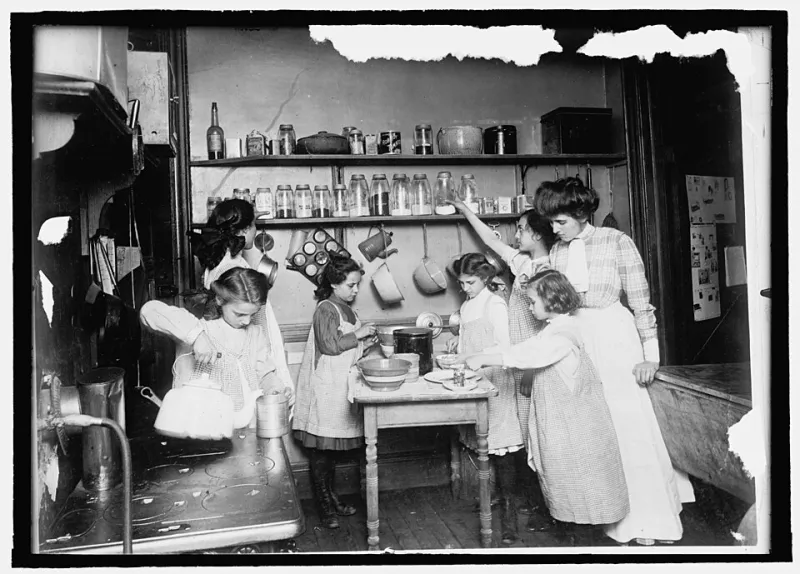
Photo: National Photo Company Collection, Public domain, via Wikimedia Commons
A craft space does not need a whole room. It needs a surface, a box, and a way to put everything away before dinner. In a small flat, that is not a compromise. It is the whole design brief.
I have made things on kitchen tables, ironing boards, bed trays and a patch of floor beside a radiator. The setups that worked were never the ones with the most storage. They were the ones I could start in five minutes and tidy in three, without apologising to anyone I live with.
The one-shoebox rule
Here is the rule that saved my sanity in a one-bed flat: your core craft kit must fit in one shoebox. Not the shoebox plus a ‘small’ basket, plus a bag of fabric, plus the good scissors that live in the kitchen drawer. One shoebox.
The current project gets one project box. Everything else — spare yarn, fabric, beads, the clay you will definitely use one day — goes into deep storage. The aim is not minimalism for its own sake. The aim is a setup you can actually be bothered to get out.
If a tool does not fit in the core box, it has to earn its place somewhere else. That is the deal.
Protect the table and the deposit
Before you unpack a single glue stick, protect the surface. A wipe-clean PVC tablecloth from Dunelm or The Range is cheaper than a new table. A large silicone mat is brilliant for glue, paint and resin. An old chopping board makes a good portable work surface for messy jobs.
If you are renting, your deposit is not a craft supply. Put an old sheet or a cheap dust sheet from B&Q under the chair if you are working over carpet. Keep paint on a tray. Use a lidded cup for water rather than a mug you will knock over. Wipe tools with kitchen roll before washing them, and never put a glue gun down on carpet — even for a second.
A tea towel over the table is not enough for paint. A silicone mat or a plastic cloth is. Learn from my mistakes.
A three-layer storage system that suits renters
Layer one: the core shoebox
Use a really useful box, a sturdy shoebox or a small Really Useful Boxes-style tub. Keep it on a shelf, under the bed or on top of a wardrobe. This is your everyday kit: scissors, glue, needles, thread, tape, pencil, ruler, craft knife and a small cutting mat. It should be grab-and-go.
Layer two: the project box
One A4 plastic box or a large takeaway container holds the current project only. Pattern, fabric, beads, instructions, the odd scrap. When the project is finished, empty it, wipe it and start again. This stops every project from merging into one giant pile of ‘stuff I will sort out later’.
Layer three: deep storage
Under-bed boxes, a lidded crate on top of the wardrobe, or a hanging shoe organiser on the back of a door. This is where the spare materials live. Label boxes with masking tape and a marker. You do not need matching labels. You need to know where the spare wicks are.
No drilling. Use over-door hooks, adhesive hooks and freestanding trolleys. An IKEA Råskog trolley is lovely if you have the floor space, but it is not essential. A box that goes back on the shelf is just as valid.
Keep glue and paint away from landlords’ carpets
Small flats have a way of making every spill travel. A few habits make a big difference:
- Work on a tray or mat, not directly on the table.
- Put a dust sheet or old picnic blanket under your chair if you are over carpet.
- Keep a ‘wet’ zone on the mat and a ‘dry’ zone off it.
- Use a lidded pot for water and a bin bag taped to the table edge for scraps.
- Keep heat tools on a heatproof mat and unplug them when you finish.
- Wear an apron. It is faster than stain removal.
If you are using resin, spray paint or strong solvents, read the label and work with ventilation. A kitchen table is not a workshop, and a small flat is not a fume cupboard. Choose water-based products when you can.
The starter kit that earns its shoebox place
You do not need much to begin. This lot fits in a shoebox or a small tub:
- A4 self-healing cutting mat
- Craft knife with spare blades
- Steel ruler
- Small sharp scissors
- PVA glue, glue stick and a compact low-temperature glue gun
- Hand sewing kit with needles, thread and pins
- Acrylic paints and three brushes
- Tape measure, pencil, eraser and fine-liner
- A5 notebook for ideas and measurements
- Small lidded pot for pins and clips
What does not earn its place yet: the sewing machine, the die-cutting machine, the resin kit and the air-dry clay set. Those are project purchases, not starter kit. Buy them when a specific project demands them, not because a video made them look essential.
Five-minute setup, three-minute tidy
A good small-space setup has a ritual. Mine goes like this:
- Clear the table.
- Wipe the surface and lay the mat.
- Get out the project box and core box.
- Set up a waste bag and a lidded water pot.
- Start.
Tidy-up is the reverse: lids on, tools back in the core box, scraps in the bin, mat wiped, project box on the shelf, cloth folded. If tidying takes longer than ten minutes, you have too much out. That is not a judgement. It is a signal to simplify.
Make it feel like somewhere you want to be
A clip-on lamp with a daylight bulb makes a huge difference on grey afternoons. A cushion on a kitchen chair helps. A playlist or podcast turns a chore into a session. A tray is your portable studio: load it with the project box and carry it to the sofa, the bed or the table.
If the table is needed for dinner, a lap tray and a sheet on the sofa works for hand-sewing, knitting and sketching. You do not need a dedicated room to have a dedicated practice.
When you share the table
Talk to the people you live with. Agree where the craft box lives and when the table is free. Keep pins off the table. Put a timer on if you are prone to losing track of time. A folding TV tray can be a brilliant second surface for a sewing machine or a cutting mat, and it folds away when you need the room back.
The one-shoebox rule is not about having less. It is about making the things you have easier to use. A small flat can hold a proper craft habit. It just needs a box, a mat and a few honest habits.