Sew Before You Buy: The Second-Hand Machine Checks That Separate a Bargain from a Boat Anchor
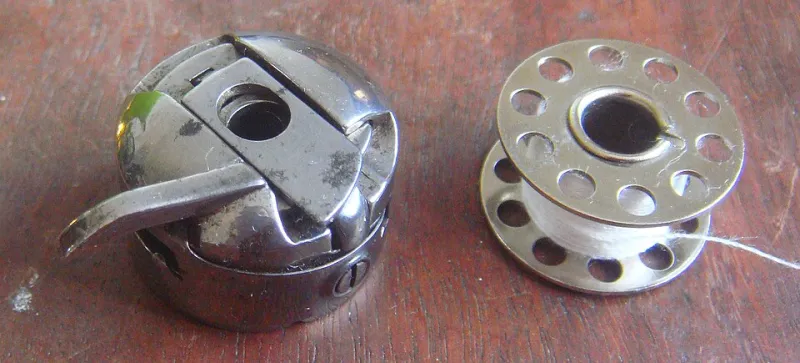
Photo: Anna Frodesiak, CC0, via Wikimedia Commons
There's a particular kind of hope that comes with a sewing machine listed at £35 on Facebook Marketplace. It's the same hope that sells knitting machines and bread makers: the idea that a lovely hobby is sitting just behind a stranger's front door, priced to clear. Sometimes it genuinely is. Other times you drive home with forty kilos of cast-iron regret and a foot pedal that smells faintly of burning.
The good news is that you don't need to be an engineer to tell the two apart. A handful of checks, done properly and in the right order, will get you most of the way there. Here's what to look at, what's cheap to fix, and what should have you politely backing towards the door.
Start with the conversation, not the machine
Before you get anywhere near a viewing, message the seller and ask three questions. Does it sew? Can you see it running? And is there anything at all that doesn't work?
A seller who says "yes, come and try it" is worth the trip. A seller who says "it just needs a service" is telling you it doesn't currently sew, and the price should reflect that. And anyone who won't let you power it up — not even for thirty seconds — is either hiding something or can't be bothered. Either way, that's a no.
If you're buying at a car boot sale, this is trickier. Many pitches have no power, so you're buying blind. That's fine, but only if you pay accordingly. Treat any untested machine as a parts donor and offer what you'd be happy to lose.
Pack a tiny test kit (it fits in a tote bag)
You'll want:
- A short extension lead, because the machine will always be furthest from the socket
- A scrap of medium cotton and a scrap of something thicker, like denim or canvas
- A spool of thread and a bobbin you don't mind losing
- A spare needle, in case the one in the machine is blunt or bent
- A small torch or your phone light
- Your phone, for downloading a manual on the spot
That little bundle turns a hopeful guess into an actual test. It takes ten minutes to assemble and it has saved me from at least two duds.
The two-minute power check
Plug it in and turn it on. You're listening as much as looking.
Press the pedal slowly. The machine should start smoothly and build speed without lurching or squealing. A faint whirr is normal. A grinding, rattling or rhythmic clunking is not — that's usually the hook assembly or a dry bearing, and it's a job for a technician, not a Saturday afternoon.
Turn the handwheel towards you by hand. It should move freely, with a bit of resistance but no stiffness and no tight spots. If it only turns away from you, or fights you at one point in the rotation, walk away.
Check the cable and plug for frayed fabric, exposed wire or a cracked casing. A tatty lead is a cheap fix; a cracked plug housing tells you how the machine has been stored.
Test sewing: the bit everyone skips
This is the heart of it. Thread the machine, drop the bobbin in, and sew a straight line on your cotton scrap. Then do it again in reverse. Then switch to zigzag, if the machine has it, and run another line.
What are you looking for? A neat, even stitch with no skipped stitches and no bird's nest underneath. Pull the fabric gently in both directions. If the seams hold, the tension is at least roughly in the right place.
Try the thicker fabric next. Most second-hand machines will manage a couple of layers of denim — if it stalls, coughs or snaps the needle on two layers of cotton canvas, the motor is tired.
Finally, listen while it runs. Any smell of hot plastic or burning dust is a hard stop. So is a needle bar that wobbles visibly, because that usually means the machine has been dropped.
Look under the plate (with permission)
Take off the needle plate — usually one or two screws — and shine your torch into the bobbin area. This is where neglect hides.
Fluff and lint are normal and brush out in seconds. Rust pitting on the metal is not. Nor is a bobbin case that's cracked, bent or simply missing, because replacements for older or obscure models can be surprisingly hard to source.
While you're there, check the plastic gears if any are visible through the casing. On some older Singers and budget machines, these are nylon and they crack with age. A cracked gear is the classic "it sews fine, then the needle won't move" fault, and it's a proper repair.
Cheap to fix versus walk away
Some faults are barely worth negotiating over:
- Blunt or bent needles — pence, replace on the spot
- Missing bobbins — a couple of pounds for a pack, as long as you know the class (15 and 66 are the common ones)
- A perished drive belt — usually under a tenner, and a five-minute job on many models
- A dead light bulb — a few pounds
- A missing foot pedal or presser foot — check the price before you commit, as some are generic and some very much aren't
And some are genuine walk-aways:
- Cracked or missing internal gears
- A seized motor, or one that smells of burning
- Badly rusted or pitted metal in the bobbin area
- A bent needle bar or a visibly dropped casing
- A brand so obscure that no one stocks parts for it
- No demonstration, no explanation and a seller who won't answer questions
That last one is underrated. A machine is a relationship, and the seller's attitude tells you a lot about how it's been treated.
What a service actually costs in 2026
A proper service — strip down, clean, oil, re-time, check tension — typically runs £55 to £90 depending on where you are in the UK and how complicated the machine is. Repairs on top of that are usually charged by the hour.
So do the maths before you commit. A solid £40 Janome plus a £70 service is a genuinely good deal at £110. A £70 machine that needs £120 of work is not, however charming it looks on the kitchen table.
The smarter route, if you can stretch to it, is a repair shop that sells fully serviced second-hand machines with a short warranty. You'll pay more up front — often £120 to £200 — but you'll skip the guessing game entirely, and you'll have somewhere to go back to.
Models worth keeping an eye out for
Older mechanical machines from Janome, Brother, Toyota, Elna and Husqvarna Viking are generally well supported in the UK, with manuals and spares easy to find online. Vintage Singer models with all-metal internals have a devoted following for good reason. Frister & Rossmann machines turn up at car boot sales regularly and are usually straightforward to keep running.
What you're avoiding is the unbranded, the very cheap and the very complicated. A 1970s mechanical machine with two stitch options will outlive most modern budget models, and it'll be far easier to fix when something goes.
Hand over the cash with a clear head
Take cash, agree the price before you arrive, and don't be afraid to say "thanks, but I'll leave it" and walk back to the car. There will be another machine. There always is — Facebook Marketplace is practically a sewing machine breeding ground.
The one you want is quiet, smooth, sews a straight line without complaint and comes with a seller who's happy to show you. Everything else is a project, and you're meant to be making things, not restoring them.